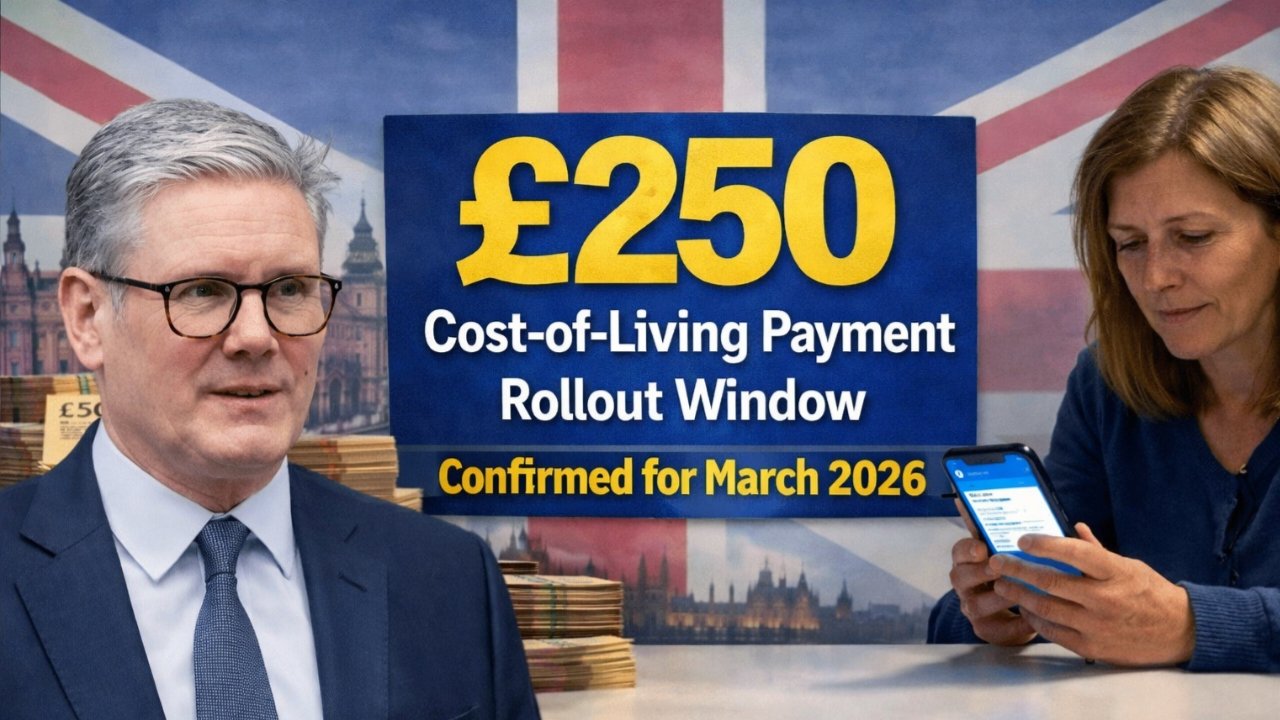
Across the UK, many households are still feeling the pressure of rising living costs. From energy bills to grocery prices, everyday expenses have increased over the past few years, and many families are continuing to look for financial support wherever possible.
Because of this, news about a £250 Cost-of-Living Payment expected around March 2026 has quickly gained attention online. Many people are asking the same questions: Who will receive the payment? When will it arrive? And do people need to apply for it?
While discussions about the payment have spread widely on social media and financial websites, it’s important to understand what the situation actually looks like and what support may realistically be available.
Why the £250 Payment Is Being Discussed
Over the past few years, the UK government introduced several Cost-of-Living Payments to help people manage rising expenses. These payments were usually targeted at households receiving certain benefits such as Universal Credit, Pension Credit, or other income-related support.
Because those payments provided direct cash assistance, many people now expect similar schemes to continue whenever economic pressure remains high.
The £250 figure being discussed for 2026 is often mentioned as another potential support payment aimed at helping vulnerable households deal with everyday costs like food, energy, and transport.
However, these payments are typically not universal payments for everyone. Instead, they are targeted support schemes linked to specific eligibility conditions.
Who Might Qualify for a £250 Cost-of-Living Payment
Whenever a cost-of-living payment is introduced, eligibility usually depends on receiving certain government benefits during a defined period.
In many previous support schemes, the people most likely to qualify included those receiving:
- Universal Credit
- Pension Credit
- Income-related Employment and Support Allowance
- Income Support
- Jobseeker’s Allowance
- Tax Credits
Payments are normally issued automatically to eligible claimants through the same bank account used for their regular benefits.
This means most recipients do not need to submit a separate application if they already receive qualifying benefits.
Important Reality About Cost-of-Living Payments in 2026
One important point many people don’t realize is that the original national Cost-of-Living Payment programme largely ended in 2024, after a series of payments were distributed to eligible households.
Since then, the government has shifted its focus toward other forms of support, such as:
- Energy bill reductions
- Household Support Fund grants distributed by local councils
- Changes to benefit policies and payment structures
This means that not every headline about a new payment necessarily represents a confirmed nationwide scheme.
When Payments Could Arrive
If a support payment like the £250 cost-of-living amount is issued, it would typically be delivered over a payment window rather than a single date.
In previous schemes, payments were rolled out over several weeks. This staggered approach helps government systems process millions of payments safely and efficiently.
That is why two people receiving the same benefit might see the payment arrive on different days.
Other Support Available in 2026
Even though nationwide cost-of-living payments may not continue in the same way as before, there are still several support programs available for households that need help.
These include:
Household Support Fund
Local councils can provide grants or vouchers to help residents with essentials like food and energy bills.
Winter Fuel Payment
Older households may receive help with heating costs during winter.
Cold Weather Payments
Extra support can be provided when temperatures fall below certain thresholds.
Benefit Adjustments
Regular benefits such as Universal Credit and pensions are periodically reviewed and adjusted.
These programs continue to provide targeted assistance to those who need it most.
Why Cost-of-Living Support Remains a Major Topic
Even though inflation has slowed compared with earlier years, many households still feel financial pressure. Rent, utilities, and food prices remain higher than they were before the cost-of-living crisis began.
Because of this, any mention of additional financial support quickly attracts attention.
For families living on tight budgets, even a £200 or £250 payment can help cover essential bills for a month or reduce short-term financial stress.
Final Thoughts
The idea of a £250 Cost-of-Living Payment in March 2026 has generated significant interest because many households are still struggling with everyday expenses.
However, it’s important to remember that large nationwide cost-of-living payments officially ended in 2024, and there has been no confirmed continuation of the same programme for 2026.
That said, various forms of financial assistance are still available through benefits, council grants, and other support schemes.
For households looking for help, the best approach is to stay updated through official government announcements and local council support programs.